
· Short Story · English Short Story · Saadat Hasan Manto
Toba Tek Singh: Saadat Hasan Manto
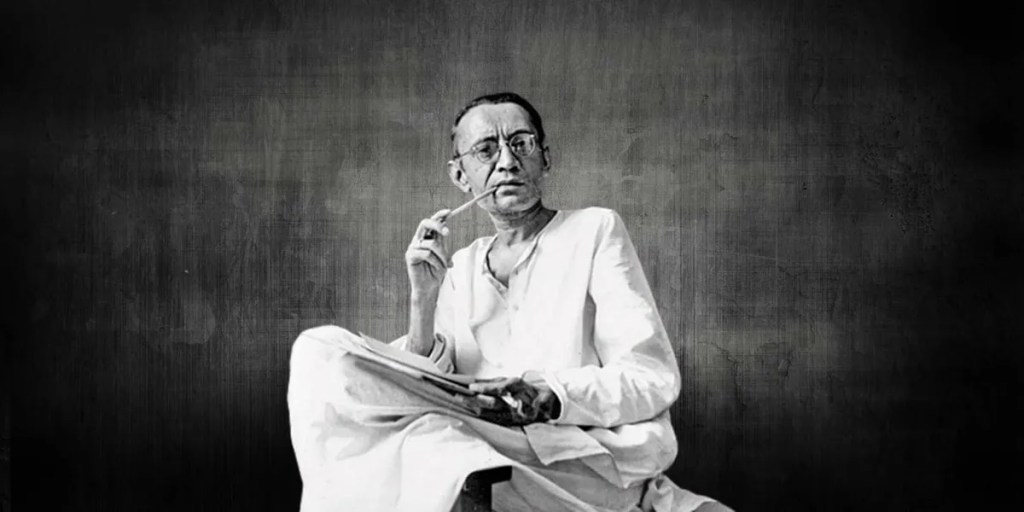
Saadat Hasan Manto: An Unflinching Chronicle of Humanity
Saadat Hasan Manto stands as one of the most significant and controversial Indo-Pakistani writers of the 20th century, renowned for his progressive and often searingly honest works. Born in the small Punjab village of Samrala, British India, on May 11, 1912, Manto was raised in a Kashmiri Sunni Muslim family, his father serving as a judge. His intellectual development was significantly shaped in his early twenties when his mentor, Abdul Bari Alig, introduced him to the rich traditions of French and Russian literature, exposing him to new narrative forms and thematic possibilities. Manto pursued studies in writing and literature at Aligarh Muslim University in India starting in 1934. During this formative period, he befriended Urdu writer Ali Sardar Jafri, another key influence. It was in college that he began crafting short stories, leading to the publication of his first work, Inqlaab Pasand (Revolutionary).
Career and Confrontation with Taboo
Manto proved to be a prolific writer, producing 22 collections of short stories alongside radio plays, essays, and screenplays. His work, however, frequently courted controversy due to its unflinching exploration of subjects considered taboo by societal norms. This often resulted in legal challenges, with several of his works facing obscenity charges. Among his most widely recognized stories from this period are Dhuan (Smoke), Kaali Shalwar (The Black Shalwar), and Bu (Odour). Following the tumultuous 1947 Partition of India, Manto relocated to Lahore, Pakistan, a move necessitated in part by the ongoing obscenity charges in India. He continued his prolific output in Pakistan, writing provocative stories that delved into themes such as sex, addiction, and corruption with raw intensity. This persistent engagement with sensitive topics continued to attract the negative attention of the Pakistani authorities, leading to Manto facing court proceedings on three further occasions.
Notable Short Stories and Thematic Depth
Several of Manto’s short stories remain cornerstones of modern Urdu literature, each offering incisive commentary on the human condition. The story Bu, for instance, centers on a man named Randheer’s obsessive fixation on a woman’s armpit smell. Through this unusual premise, Manto profoundly explores complex ideas of desire, alienation, and dissatisfaction, demonstrating his unique ability to find universal themes in unconventional subjects. Bu was notably the first of his works to lead to charges of obscenity. Published in 1936, predating the Partition, Atish Paray (Embers) is a significant early collection comprising eight stories, including Tamasha (Spectacle) and the aforementioned Inqlaab Pasand. Manto initially faced difficulties securing a publisher in India for this collection, which was eventually published in Pakistan. Perhaps his most celebrated post-Partition work is Toba Tek Singh, a satirical short story set in a mental asylum following the division of India and Pakistan. The narrative revolves around a group of inmates grappling with the absurdity of the political division. The central character, Bishan Singh, a Sikh inmate, is profoundly confused about which country his hometown, Toba Tek Singh, now belongs to. His refusal to leave the asylum, culminating in his death in the no-man’s-land between the two newly formed nations, serves as a powerful allegory for the senselessness and tragedy of the Partition and its devastating impact on individual identity and belonging.
Legacy and Personal Struggles
Despite the frequent criticism and legal battles throughout his career, Manto’s works are now widely recognized for their power and importance. He fearlessly addressed crucial societal issues such as corruption, addiction, and other taboo topics, solidifying his reputation for not shying away from subjects that discomforted his audience. This commitment is perhaps best encapsulated in his famous quote: “If you cannot bear these stories then the society is unbearable.” Manto was also candid about his personal demons, including his struggle with alcoholism, which he openly discussed in his writings, notably in his essay Letters to Uncle Sam. Tragically, this battle contributed to his premature death from liver cirrhosis on January 18, 1955, at the age of just 42, leaving behind a body of work that continues to challenge and resonate with readers worldwide.
Toba Tek Singh
Two or three years after Partition, the governments of Pakistan and India decided to exchange lunatics in the same way that they had exchanged civilian prisoners. In other words, Muslim lunatics in Indian madhouses would be sent to Pakistan, while Hindu and Sikh lunatics in Pakistani madhouses would be handed over to India.
I can’t say whether this decision made sense or not. In any event, a date for the lunatic exchange was fixed after high level conferences on both sides of the border. All the details were carefully worked out. On the Indian side, Muslim lunatics with relatives in India would be allowed to stay. The remainder would be sent to the frontier. Here in Pakistan nearly all the Hindus and Sikhs were gone, so the question of retaining non-Muslim lunatics did not arise. All the Hindu and Sikh lunatics would be sent to the frontier in police custody.
I don’t know what happened over there. When news of the lunatic exchange reached the madhouse here in Lahore, however, it became an absorbing topic of discussion among the inmates. There was one Muslim lunatic who had read the newspaper _Zamindar_1 every day for twelve years. One of his friends asked him: “Maulvi Sahib! What is Pakistan?” After careful thought he replied: “It’s a place in India where they make razors.”
Hearing this, his friend was content.
One Sikh lunatic asked another Sikh: “Sardar ji, why are they sending us to India? We don’t even speak the language.”
“I understand the Indian language,” the other replied, smiling. “Indians are devilish people who strut around haughtily,” he added.
While bathing, a Muslim lunatic shouted “Long live Pakistan!” with such vigor that he slipped on the floor and knocked himself out.
There were also some lunatics who weren’t really crazy. Most of these inmates were murderers whose families had bribed the madhouse officials to have them committed in order to save them from the hangman’s noose. These inmates understood something of why India had been divided, and they had heard of Pakistan. But they weren’t all that well informed. The newspapers didn’t tell them a great deal, and the illiterate guards who looked after them weren’t much help either. All they knew was that there was a man named Mohammed Ali Jinnah, whom people called the Qaid-e-Azem. He had made a separate country for the Muslims, called Pakistan. They had no idea where it was, or what its boundaries might be. This is why all the lunatics who hadn’t entirely lost their senses were perplexed as to whether they were in Pakistan or India. If they were in India, then where was Pakistan? If they were in Pakistan, then how was it that the place where they lived had until recently been known as India?
One lunatic got so involved in this India/Pakistan question that he became even crazier. One day he climbed a tree and sat on one of its branches for two hours, lecturing without pause on the complex issues of Partition. When the guards told him to come down, he climbed higher. When they tried to frighten him with threats, he replied: “I will live neither in India nor in Pakistan. I’ll live in this tree right here!” With much difficulty, they eventually coaxed him down. When he reached the ground he wept and embraced his Hindu and Sikh friends, distraught at the idea that they would leave him and go to India.
One man held an M.S. degree and had been a radio engineer. He kept apart from the other inmates, and spent all his time walking silently up and down a particular footpath in the garden. After hearing about the exchange, however, he turned in his clothes and ran naked all over the grounds.
There was one fat Muslim lunatic from Chiniot who had been an enthusiastic Muslim League activist. He used to wash fifteen or sixteen times a day, but abandoned the habit overnight. His name was Mohammed Ali. One day he announced that he was the Qaid-e-Azem, Mohammed Ali Jinnah. Seeing this, a Sikh lunatic declared himself to be Master Tara Singh. Blood would have flowed, except that both were reclassified as dangerous lunatics and confined to separate quarters.
There was also a young Hindu lawyer from Lahore who had gone mad over an unhappy love affair. He was distressed to hear that Amritsar was now in India, because his beloved was a Hindu girl from that city. Although she had rejected him, he had not forgotten her after losing his mind. For this reason he cursed the Muslim leaders who had split India into two parts, so that his beloved remained Indian while he became Pakistani.
When news of the exchange reached the madhouse, several lunatics tried to comfort the lawyer by telling him that he would be sent to India, where his beloved lived. But he didn’t want to leave Lahore, fearing that his practice would not thrive in Amritsar.
In the European Ward there were two Anglo-Indian lunatics. They were very worried to hear that the English had left after granting independence to India. In hushed tones, they spent hours discussing how this would affect their situation in the madhouse. Would the European Ward remain, or would it disappear? Would they be served English breakfasts? What, would they be forced to eat poisonous bloody Indian chapattis instead of bread?
One Sikh had been an inmate for fifteen years. He spoke a strange language of his own, constantly repeating this nonsensical phrase: “Upri gur gur di annexe di be-dhiyan o mung di daal of di lalteen.“2 He never slept. According to the guards, he hadn’t slept a wink in fifteen years. Occasionally, however, he would rest by propping himself against a wall.
His feet and ankles had become swollen from standing all the time, but in spite of these physical problems he refused to lie down and rest. He would listen with great concentration whenever there was discussion of India, Pakistan and the forthcoming lunatic exchange. Asked for his opinion, he would reply with great seriousness: “Upri gur gur di annexe di be-dhiyana di mung di daal of di Pakistan gornament.“3
Later he replaced “of di Pakistan gornament” with “of di Toba Tek Singh gornament.” He also started asking the other inmates where Toba Tek Singh was, and to which country it belonged. But nobody knew whether it was in Pakistan or India. When they argued the question they only became more confused. After all, Sialkot had once been in India, but was apparently now in Pakistan. Who knew whether Lahore, which was now in Pakistan, might not go over to India tomorrow? Or whether all of India might become Pakistan? And was there any guarantee that both Pakistan and India would not one day vanish altogether?
This Sikh lunatic’s hair was unkempt and thin. Because he washed so rarely, his hair and beard had matted together, giving him a frightening appearance. But he was a harmless fellow. In fifteen years, he had never fought with anyone.
The attendants knew only that he owned land in Toba Tek Singh district. Having been a prosperous landlord, he suddenly lost his mind. So his relatives bound him with heavy chains and sent him off to the madhouse.
His family used to visit him once a month. After making sure that he was in good health, they would go away again. These family visits continued for many years, but they stopped when the India/Pakistan troubles began.
This lunatic’s name was Bashan Singh, but everyone called him Toba Tek Singh. Although he had very little sense of time, he seemed to know when his relatives were coming to visit. He would tell the officer in charge that his visit was impending. On the day itself he would wash his body thoroughly and comb and oil his hair. Then he would put on his best clothes and go to meet his relatives.
If they asked him any question he would either remain silent or say: “Upri gur gur di annexe di be-dhiyana di mung di daal of di laaltein.”
Bashan Singh had a fifteen-year-old daughter who grew by a finger’s height every month. He didn’t recognize her when she came to visit him. As a small child, she used to cry whenever she saw her father. She continued to cry now that she was older.
When the Partition problems began, Bashan Singh started asking the other lunatics about Toba Tek Singh. Since he never got a satisfactory answer, his concern deepened day by day.
Then his relatives stopped visiting him. Formerly he could predict their arrival, but now it was as though the voice inside him had been silenced. He very much wanted to see those people, who spoke to him sympathetically and brought gifts of flowers, sweets and clothing. Surely they could tell him whether Toba Tek Singh was in Pakistan or India. After all, he was under the impression that they came from Toba Tek Singh, where his land was.
There was another lunatic in that madhouse who thought he was God. One day, Bashan Singh asked him whether Toba Tek Singh was in Pakistan or India. Guffawing, he replied: “Neither, because I haven’t yet decided where to put it!”
Bashan Singh begged this “God” to resolve the status of Toba Tek Singh and thus end his perplexity. But “God” was far too busy to deal with this matter because of all the other orders that he had to give. One day Bashan Singh lost his temper and shouted: “Upri gur gur di annexe di be-dhiyana di mung di daal of wahay Guru ji wa Khalsa and wahay Guru ji ki fatah. Jo bolay so nahal sat akal!”
By this he might have meant: “You are the God of the Muslims. If you were a Sikh God then you would certainly help me.”
A few days before the day of the exchange, one of Bashan Singh’s Muslim friends came to visit from Toba Tek Singh. This man had never visited the madhouse before. Seeing him, Bashan Singh turned abruptly and started walking away. But the guard stopped him.
“He’s come to visit you. It’s your friend Fazluddin,” the guard said.
Glancing at Fazluddin, Bashan Singh muttered a bit. Fazluddin advanced and took him by the elbow. “I’ve been planning to visit you for ages, but I haven’t had the time until now,” he said. “All your relatives have gone safely to India. I helped them as much as I could. Your daughter Rup Kur . . .”
Bashan Singh seemed to remember something. “Daughter Rup Kur,” he said.
Fazluddin hesitated, and then replied: “Yes, she’s . . . she’s also fine. She left with them.”
Bashan Singh said nothing. Fazluddin continued: “They asked me to make sure you were all right. Now I hear that you’re going to India. Give my salaams to brother Balbir Singh and brother Wadhada Singh. And to sister Imrat Kur also . . . Tell brother Balbir Singh that I’m doing fine. One of the two brown cows that he left has calved. The other one calved also, but it died after six days. And . . . and say that if there’s anything else I can do for them, I’m always ready. And I’ve brought you some sweets.”
Bashan Singh handed the package over to the guard. “Where is Toba Tek Singh?” he asked.
Fazluddin was taken aback. “Toba Tek Singh? Where is it? It’s where it’s always been,” he replied.
“In Pakistan or in India?” Bashan Singh persisted.
Fazluddin became flustered. “It’s in India. No no, Pakistan.”
Bashan Singh walked away, muttering: “Upar di gur gur di annexe di dhiyana di mung di daal of di Pakistan and Hindustan of di dar fatay mun!” (“Above all the sweetness and meditation on lentils/sustenance of Pakistan and Hindustan, there lies fear and anxiety.”)
Finally all the preparations for the exchange were complete. The lists of all the lunatics to be transferred were finalized, and the date for the exchange itself was fixed.
The weather was very cold. The Hindu and Sikh lunatics from the Lahore madhouse were loaded into trucks under police supervision. At the Wahga border post, the Pakistani and Indian officials met each other and completed the necessary formalities. Then the exchange began. It continued all through the night.
It was not easy to unload the lunatics and send them across the border. Some of them didn’t even want to leave the trucks. Those who did get out were hard to control because they started wandering all over the place. When the guards tried to clothe those lunatics who were naked, they immediately ripped the garments off their bodies. Some cursed, some sang, and others fought. They were crying and talking, but nothing could be understood. The madwomen were creating an uproar of their own. And it was cold enough to make your teeth chatter.
Most of the lunatics were opposed to the exchange. They didn’t understand why they should be uprooted and sent to some unknown place. Some, only half-mad, started shouting “Long live Pakistan!” Two or three brawls erupted between Sikh and Muslim lunatics who became enraged when they heard the slogans.
When Bashan Singh’s turn came to be entered in the register, he spoke to the official in charge. “Where is Toba Tek Singh?” he asked. “Is it in Pakistan or India?”
The official laughed. “It’s in Pakistan,” he replied.
Hearing this, Bashan Singh leapt back and ran to where his remaining companions stood waiting. The Pakistani guards caught him and tried to bring him back to the crossing point, but he refused to go.
“Toba Tek Singh is here!” he cried. Then he started raving at top volume: “Upar di gur gur di annexe di be-dhiyana mang di daal of di Toba Tek Singh and Pakistan!” (“Above all the confused talk about taking over land and not caring about the basic food needs of Toba Tek Singh and Pakistan!”)
The officials tried to convince him that Toba Tek Singh was now in India. If by some chance it wasn’t they would send it there directly, they said. But he wouldn’t listen.
Because he was harmless, the guards let him stand right where he was while they got on with their work. He was quiet all night, but just before sunrise he screamed. Officials came running from all sides. After fifteen years on his feet, he was lying face down on the ground. India was on one side, behind a barbed wire fence. Pakistan was on the other side, behind another fence. Toba Tek Singh lay in the middle, on a piece of land that had no name.
- Note: Good literature is posted here with the intention of reaching everyone. There is no other commercial purpose. If anyone has any objections to this, please let me know. I will remove them. The copyright of the works belongs to the author.
First published on என் நன்மொழி (WordPress).